
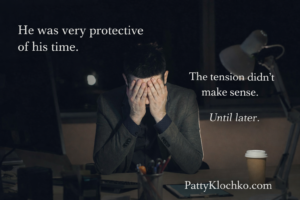
Photo by Vitaly Gariev on Unsplash
Many betrayed partners describe something they couldn’t explain for years.
Their spouse seemed strangely protective of certain blocks of time.
Late evenings.
Bathroom time.
Time alone with devices.
Errands that had to be done alone.
Moments after everyone else went to bed.
And if that time was interrupted — even by something normal like a child needing help with homework — the mood could suddenly change.
Irritation.
Withdrawal.
A heaviness in the room.
Many women say the same thing:
“You could feel the tension immediately.”
At the time, it often made no sense.
But after discovery, many partners realize something deeply unsettling:
Those moments of tension were often protecting access to the secret life.
When “Protecting Time” Isn’t About Time
In relationships impacted by deception, the protection of time is often not random.
It may reflect something deeper:
Protection of access to a hidden reality.
When private sexual behavior, fantasy, emotional affairs, or secret online activity are present, access to privacy becomes important.
That privacy requires:
• time
• secrecy
• mental space
• emotional distance
• limited interruption
When that access is threatened, tension can appear.
Not because the request is unreasonable.
But because it interferes with the hidden system.
The Entitlement Dynamic
Many partners later recognize a pattern of entitlement to private time.
This may include:
• irritation when asked to spend time together
• impatience when children need attention
• withdrawal when connection is expected
• defensiveness around devices
• protectiveness of evenings or late nights
The reaction can feel disproportionate to the situation.
A small interruption may create noticeable frustration.
This is often confusing for partners, because the request itself is normal.
But the reaction may be connected to protecting access to the hidden behavior.
Compartmentalization: Living in Two Realities
Another dynamic that often operates in deceptive systems is compartmentalization.
This allows a person to maintain two separate realities:
The visible life
• marriage
• family
• responsibilities
• shared routines
The hidden life
• pornography
• fantasy
• emotional affairs
• secret communication
• private sexual behavior
These realities remain mentally separated.
But maintaining that separation requires protected access.
Protected time.
Protected privacy.
Protected mental space.
When that access is interrupted, tension can appear.
Why the Irritation Can Feel So Strong
Many partners describe the reaction as emotionally intense.
They may notice:
• sudden mood shifts
• withdrawal after family time
• irritability in the evening
• tension during vacations
• frustration when connection is expected
At the time, these moments may seem unrelated.
But after discovery, many partners begin to see a pattern.
The tension often appeared when access to privacy was disrupted.
Common Situations Partners Later Recognize
Many betrayed partners recall moments like:
A child needing help with homework
Right when he seemed ready to be alone
A nice dinner out
Followed by sudden emotional withdrawal at home
Vacations
Where tension appeared during private downtime
Evenings
Where he became impatient for everyone to go to bed
Requests for connection
Met with irritation or distance
These moments often felt confusing at the time.
But later, they sometimes form a recognizable pattern.
The Emotional Timeline of the Relationship
After discovery, many partners realize something striking.
They can almost map the emotional timeline of their relationship.
The tension often appeared:
• when privacy was disrupted
• when connection was expected
• when family routines changed
• when access to devices was limited
• when alone time was interrupted
What once felt random begins to make sense.
The irritation was not always about the interruption itself.
It was sometimes about protecting access to the hidden world.
Trusting What You Felt
Many partners sensed something was wrong long before discovery.
But without the missing information, the tension was often explained away.
“He’s just stressed.”
“Work was hard today.”
“I’m probably overthinking.”
In reality, the nervous system was often responding to something real — the emotional atmosphere created by a hidden system operating inside the relationship.
Understanding this dynamic can help restore something many betrayed partners lose during deception:
trust in their own perception.
A Gentle Reflection
When someone is unusually protective of their time, it may be worth asking a deeper question:
What is that time protecting?
Because in many deceptive sexual systems, the irritation was never really about the interruption.
It was about protecting access to a hidden reality.
If This Pattern Feels Familiar
If you are looking back and recognizing this pattern, you are not alone.
Many betrayed partners describe this same experience after discovery.
Understanding these dynamics can help make sense of moments that once felt confusing and restore clarity to the story of what happened.
If you are navigating betrayal and looking for trauma-informed support, you can visit the Betrayed Partner Support on my home page for resources designed specifically for partners:
You deserve clarity, support, and care grounded in understanding the full impact of deception.
Helping women heal,
Patty Klochko
Facebook Messenger | http://m.me/m.patty.klochko
Facebook Page | https://www.facebook.com/pattyklochko/
Instagram | https://www.instagram.com/m.pattyklochko/
Self-Care Resources | Science-supported wellness & skincare
Affiliate Opportunity available | Learn more